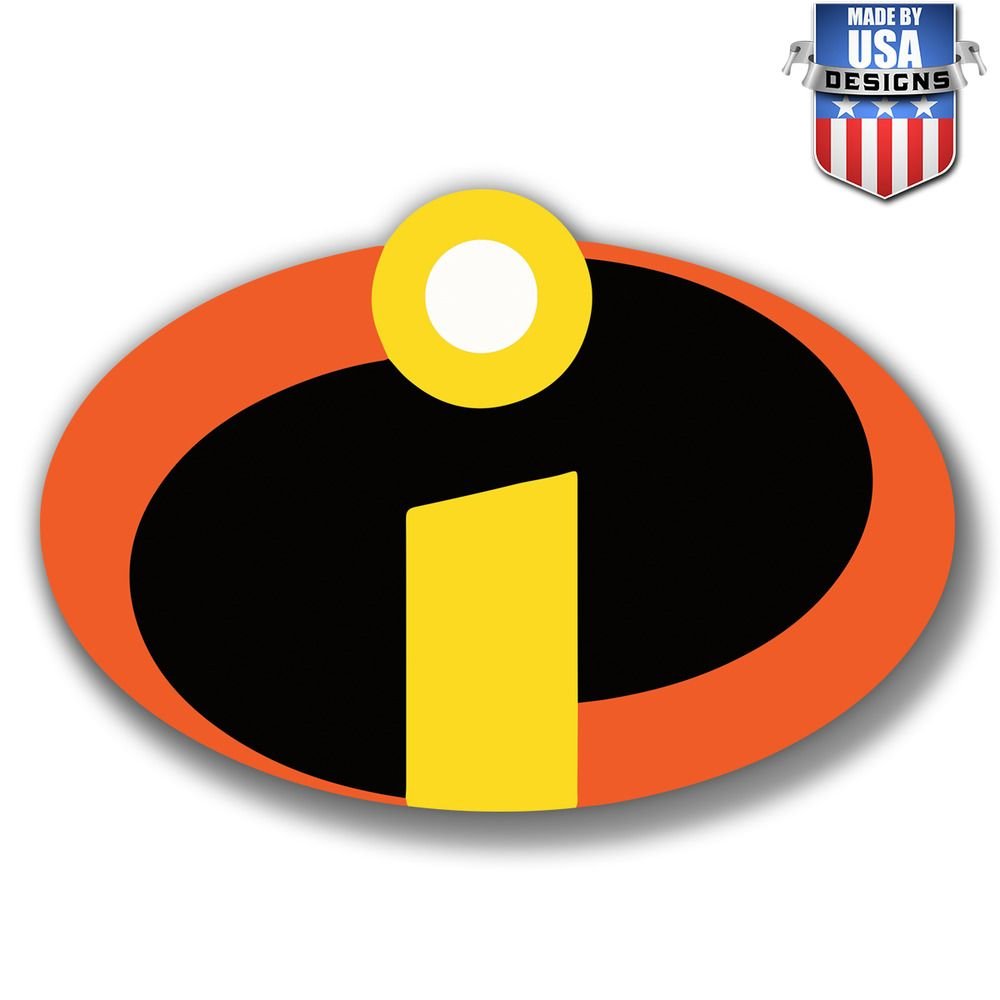
You've probably felt it—that sudden surge of inspiration to create something truly "incredible" after rewatching the Parr family's adventures. Whether you're sketching a new superhero persona, crafting a meticulously detailed costume, or reimagining the Incredibles universe entirely, the iconic Incredibles logo for fan art and cosplay is almost always at the heart of your visual identity. It’s more than just an "i" within an ellipse; it's a shorthand for heroism, family, and extraordinary power.
This guide is for every fan, artist, and cosplayer looking to harness the magic of that emblem. We're diving deep into the logo's design, how to adapt it, and best practices for bringing your unique vision to life—all while keeping that undeniable Incredibles spirit intact.
At a Glance: Crafting Your "Incredible" Emblem
- Understanding the Core: The Incredibles logo's power lies in its simplicity, clean lines, and iconic "i" within an ellipse.
- Beyond Red & Black: Learn how to adapt colors, typography, and symbols while maintaining recognizable flair.
- Practical Application: Get actionable tips for integrating your custom logo into both physical cosplay and digital fan art.
- Avoid Common Traps: Discover how to keep your design professional and impactful, avoiding pitfalls like poor execution or over-customization.
- Storytelling Through Design: Use your logo as a powerful narrative tool for your original characters or alternate universe concepts.
The Enduring Power of a Simple Symbol
Why, after all these years, does The Incredibles continue to captivate audiences and inspire a vibrant community of fan artists and cosplayers? A huge part of its lasting appeal lies in its brilliant design, extending from its timeless story to its distinct visual language. And nothing screams "Incredibles" quite like its instantly recognizable logo. This isn't just a fleeting trend; the hype has consistently remained strong, a testament to Pixar's masterful storytelling and world-building.
The logo itself is a masterclass in minimalist design. It distills complex ideas of family, heroism, and mid-century modern aesthetics into a few elegant strokes. For anyone creating fan content, this symbol acts as a powerful anchor, immediately connecting their work to a beloved universe. It’s a beacon for collaboration, creativity, and shared passion, bridging the gap between official canon and individual imagination.
Decoding the Icon: Elements of the Incredibles Logo
Before you can bend the rules, you need to understand them. The Incredibles logo is deceptively simple, yet every element plays a crucial role in its impact.
The Bold "i": More Than Just a Letter
At its heart, the logo features a lowercase "i." This isn't just any "i," however. It's rendered in a custom, stylized font that exudes strength, speed, and a touch of retro-futurism. The dot above the "i" is often elongated or incorporated into the overall flow, giving it a dynamic, almost aerodynamic feel. This single letter serves as the anchor, representing individualism within a collective.
The Encircling Ellipse: Unity and Protection
The "i" is typically encased within an ellipse—a slightly squashed circle that feels both classic and streamlined. This shape isn't arbitrary; it suggests containment, unity, and a sense of protection, echoing the Parr family's tight-knit bond. It also gives the logo a badge-like quality, perfect for superhero insignias.
The Signature Color Palette: Energy and Urgency
While variations exist, the primary Incredibles logo is almost universally recognized by its vibrant red background, often accented with black and sometimes a hint of orange or yellow. Red signifies power, passion, and urgency—fitting for a family of supers. Black provides strong contrast and definition, while the subtle warmer tones add depth and a touch of the golden age of comics. For a deeper dive into its design and history, you can Explore the Incredibles logo.
The Overall Aesthetic: Sleek, Modern, and Timeless
Combined, these elements create a logo that is both sleekly modern and undeniably classic. It evokes the clean lines of mid-century design while remaining relevant in a contemporary context. This timelessness is precisely what makes it so adaptable for fan creations; it never feels dated, only iconic.
Beyond the Standard: Customizing for Your Universe
Now for the fun part: taking that iconic foundation and making it uniquely yours. Whether you're designing a logo for an Original Character (OC), an alternate universe, or a crossover concept, adapting the Incredibles style is an art.
Personalizing the "i": Crafting Your Initial
The most straightforward customization is to swap the "i" for another letter. This is your chance to introduce your character's initial.
- Maintain the Style: Don't just pick any font. Try to find a typeface that mimics the original's geometric, slightly condensed, and dynamic feel. Think Gotham, ITC Avant Garde Gothic, or even custom modifications of these.
- Consider Legibility: Ensure your chosen letter remains clear and impactful, even at small sizes.
- Embrace the Dot: If your letter has a dot (like 'j'), consider how to stylize it. Can it become a subtle design element, a small power indicator, or even subtly incorporated into the letterform itself?
Example: If your OC is named "Spectra," you might use a stylized "S" that flows with the same dynamic energy as the original "i," perhaps with a subtle curve that suggests light or energy.
Color Play: A Spectrum of Superpowers
While red is paramount, judicious color changes can profoundly alter the logo's meaning without losing its identity.
- Heroic Hues: If your character has ice powers, a deep blue or icy cyan could replace the red. For a nature-based hero, rich greens or earthy browns might be appropriate.
- Villainous Variations: An antagonist's logo could use inversions or darker palettes—think purples, grays, or even sickly greens. This creates an immediate visual contrast that communicates alignment.
- Subtle Shifts: You don't always need a complete overhaul. Sometimes, simply changing the accent color (from orange to electric blue, for instance) can signify a different power set or personality trait.
Tip: Always consider how your chosen colors relate to your character's powers, personality, and costume design. Visual consistency makes your fan creation feel more cohesive and professional.
Adding Personal Flourishes: Beyond the Base
The Incredibles logo is clean, but your custom version can carry subtle additional details to hint at deeper aspects of your character.
- Subtle Textures: A metallic sheen, a subtle energy glow around the edges, or even a slight cracked effect can add character.
- Incorporated Symbols: Can a tiny, barely noticeable lightning bolt be integrated into the letter 'L' for a speedster? Can a stylized feather be part of an 'A' for a winged hero? These are small nods that superfans will appreciate.
- Shape Modification: While the ellipse is core, could it be slightly angled, or could one edge be slightly distorted to suggest motion or a unique power impact? Be careful not to lose the original structure, though.
Analogy: Think of it like a signature dish. You can add new spices or ingredients, but the core flavor profile should still be recognizable.
Contextualizing the Logo: Placement and Presentation
The best custom logo won't shine if it's poorly presented. Think about where and how your logo will appear in your art or on your costume.
- Strategic Placement: The chest is classic, but consider other locations: a utility belt buckle, shoulder pads, the side of a gauntlet, or even subtly incorporated into a boot design.
- Scale and Proportion: Ensure the logo is appropriately sized for its context. Too small, and it gets lost; too large, and it can overwhelm.
- Dynamic Usage: In fan art, the logo doesn't have to be static. Imagine it shimmering with energy, projecting as a light, or appearing as a subtle reflection.
Practical Applications: Bringing Your Vision to Life
Once your custom Incredibles-style logo is designed, the next step is to make it tangible. This process varies significantly between cosplay and fan art, each with its own set of tools and techniques.
For Cosplay: Wearing Your Emblem with Pride
Creating a physical logo for your costume requires attention to durability, material, and attachment methods.
Materials & Techniques:
- Fabric Painting:
- Best for: Flexible surfaces like bodysuits, capes.
- How-to: Create a stencil (paper, vinyl), secure it to the fabric, and use fabric paints. Multiple thin coats are better than one thick one. Heat-set according to paint instructions.
- Tip: Practice on scrap fabric first to get a feel for paint consistency and stencil adhesion.
- Embroidery/Appliqué:
- Best for: A high-quality, textured finish on fabric.
- How-to: Appliqué involves cutting your logo from a contrasting fabric, sewing it onto the costume (zig-zag stitch is common). Embroidery can be done by hand or machine for intricate details.
- Tip: Machine embroidery services can create professional-grade patches from your digital design.
- Iron-On Patches/Vinyl Decals:
- Best for: Quick application, smooth finishes, sharp edges.
- How-to: Purchase pre-made iron-on vinyl or get a custom vinyl decal cut. Iron-ons are applied with heat; decals adhere with pressure.
- Tip: Ensure your fabric can withstand the heat if using iron-ons. For decals, clean and smooth the surface thoroughly.
- 3D Printing/Sculpting:
- Best for: Hard emblems (e.g., belt buckles, chest pieces on armored costumes), props.
- How-to: Design your logo in 3D software, print it (or sculpt it from EVA foam/Worbla), then sand, prime, and paint it.
- Tip: Consider magnets or strong adhesives (like E6000) for attaching 3D emblems securely to fabric without causing damage.
Placement & Scale: Making It Pop
- Chest: The most classic placement. Ensure it’s centered and scaled proportionally to your chest size.
- Belt Buckle: A popular alternative, especially for characters with utility belts. This can be 3D printed or sculpted.
- Gauntlets/Shoulder Pads: For more armored or tactical looks, smaller logos can be incorporated into these pieces.
- Capes/Backs: A large, striking logo on the back of a cape adds dramatic flair, especially for dynamic poses.
Durability & Finish: Looking Professional
- Sealants: Use clear fabric sealants for painted logos or clear coats for 3D printed pieces to protect against wear and tear.
- Edge Finishing: For appliqué, ensure edges are neatly sewn. For painted designs, clean, crisp lines are paramount.
- Wrinkle-Free: Keep your costume and logo smooth. Wrinkles can distort the design and make it look amateurish.
For Fan Art: Visual Storytelling in Digital and Traditional Mediums
Integrating your custom logo into fan art means thinking about composition, style, and how the logo serves the narrative.
Digital Tools: Precision and Flexibility
- Vector Graphics (Adobe Illustrator, Inkscape):
- Best for: Creating sharp, scalable logos that can be resized indefinitely without losing quality. Ideal for clean, crisp lines.
- How-to: Use pen tools and shape builders to construct your logo. This is the professional standard for logo design.
- Tip: Vector graphics are excellent for generating stencils or files for 3D printing later.
- Raster Graphics (Adobe Photoshop, Procreate, Clip Studio Paint):
- Best for: Integrating logos into complex scenes, adding textures, lighting, and effects.
- How-to: Create your logo on a separate layer. Use blending modes, layer styles, and brushes to add glow, reflections, shadows, or distress.
- Tip: Start with a high-resolution canvas to avoid pixelation, especially if you plan to print your art.
Traditional Mediums: Handcrafted Charm
- Stenciling: Create a physical stencil and trace or paint through it for consistent shapes.
- Freehand Drawing: If you have a steady hand, drawing the logo directly onto your artwork allows for organic integration and subtle imperfections that can add character.
- Mixed Media: Combine drawn logos with collaged elements or textured papers for unique effects.
Integrating into Scenes: Dynamic Impact
- Character Costumes: The most obvious placement. Ensure the logo follows the contours of the character's body and costume.
- Environmental Elements: Imagine the logo subtly etched into a superhero base, projected onto a wall, or even as a stylized element in a futuristic cityscape.
- Gadgets and Vehicles: A custom logo on a hero's vehicle or a specialized gadget immediately links it to their identity.
- Storytelling Cues: A slightly damaged logo could indicate a tough battle. A sparkling new one could signal a fresh beginning.
Common Pitfalls & How to Avoid Them
Even with the best intentions, it's easy to stumble. Being aware of common issues can save you time and frustration.
Loss of Recognition: Over-Customizing
The biggest trap is altering the logo so much that it no longer feels "Incredibles." While customization is encouraged, the core elements (geometric "i"-style letter, enclosed shape, bold color scheme) should remain.
- Solution: Test your design. Show it to a few friends who know The Incredibles and ask if they can identify the inspiration. If not, dial back the changes and re-evaluate which core elements you've abandoned.
Poor Execution: The Devil in the Details
A fantastic design can be ruined by sloppy application, whether in print or on fabric.
- Fuzzy Lines: Ensure your stencils are sharp and securely taped. For digital art, use vector tools for crisp edges.
- Inconsistent Colors: If painting, mix enough paint for the entire project. For digital, use consistent color codes.
- Bubbles/Wrinkles: When applying vinyl or iron-ons, take your time and use appropriate tools (squeegee, iron) to ensure a smooth finish.
- Solution: Patience and practice. Don't rush. Invest in good quality materials and take the time to refine your technique.
Copyright Considerations: Staying Within Bounds
While fan art and cosplay are generally welcomed as tributes, it's important to understand the line between personal expression and commercial infringement.
- Personal Use vs. Commercial Use: For personal enjoyment—making a costume for a con, drawing art for your social media—you're almost certainly fine. Selling items directly featuring official, unaltered logos or characters without permission is where you run into issues.
- Transformative Work: When you create original characters, new stories, or highly stylized/parody versions, your work becomes more "transformative," which offers some legal gray area.
- Solution: For any commercial aspirations, always default to creating entirely original content or seeking proper licensing. For pure fan works, focus on creativity and respect for the source material.
The Incredibles Universe: Expanding Your Logo Inspiration
The richness of the Incredibles world offers endless avenues for creating logos that fit right in. Think about how the characters themselves are designed, their powers, and even their personalities.
Character-Specific Logos: Reflecting Personality
Every hero (or villain) needs an emblem that captures their essence. When designing for your own character, draw inspiration from their unique traits.
- Gazerbeam (Simon J. Paladino): We know Gazerbeam was a powerful hero, but off-costume, Simon J. Paladino was described as shy and quiet. How might a logo for him reflect this duality? Perhaps a strong, bold design that subtly incorporates elements of fragility or intricate patterns that hint at a quiet complexity beneath the surface power.
- Your OC's Powers: A character with sonic abilities might have a logo that incorporates stylized sound waves or vibrations into their initial. A character with invisibility might have a logo with fading or layered elements.
- Your OC's Personality: Is your character boisterous and confident? Their logo might be sharp and aggressive. Are they more cerebral and strategic? Perhaps a sleeker, more intricate design.
Family & Team Logos: United We Stand
The core Incredibles logo is a family emblem. You can apply this concept to your own fan-made teams or family units.
- Interlocking Initials: Instead of a single "i," perhaps two or three initials intertwine within the ellipse, signifying a partnership or family bond.
- Shared Design Elements: A common color, a specific geometric motif, or a consistent font style can visually link multiple individual logos to a larger team identity.
- Evolving Logos: Imagine a hero whose logo changes slightly over time to reflect new experiences, powers, or relationships, much like how characters might meet on an island by coincidence or luck, forging new bonds.
Villain Logos (Anti-Incredibles): A Design Duality
Designing a villain's logo in the Incredibles style presents a fascinating challenge: how to make it oppose without simply being a negative.
- Inverted Colors: Red and black for heroes? Try green and purple, or stark white and black for villains.
- Sharp Angles/Jagged Edges: The hero logo is smooth. A villain's might have broken lines, aggressive spikes, or an overall chaotic feel.
- Subtle Distortion: A hero's logo is perfectly balanced. A villain's could be slightly off-kilter, hinting at their twisted morality or instability.
Example: If Syndrome's "S" logo had been designed in the Incredibles style, it might have been an "S" with overly sharp, almost dangerous points, encased in a jagged, broken ellipse, reflecting his bitter envy and destructive ambition.
Beyond the Emblem: Storytelling Through Design
A logo is never just a pretty picture; it's a powerful narrative device. In the world of The Incredibles, a logo immediately tells you about the hero it represents, their values, and their place in the universe.
Think about how Gazerbeam's shy, quiet personality off-costume contrasts with his heroic persona. A well-designed logo could subtly hint at this duality. Perhaps it has a hidden, intricate pattern only visible up close, or its boldness is balanced by a slightly subdued color palette. This kind of thoughtful design adds layers to your character, inviting viewers to look closer and speculate on their backstory.
Your custom logo for fan art or cosplay becomes a visual shorthand for your character's essence. It communicates their powers, their allegiances, and even their moral compass. When placed on a costume or within an artwork, it's not just decoration—it's a critical piece of visual storytelling, instantly conveying information and drawing the audience deeper into the narrative you're creating.
Frequently Asked Questions About Incredibles Logo Customization
Got some quick questions about tailoring your Incredibles-inspired emblem? Here are some crisp, standalone answers.
What font is used for the Incredibles logo?
The font used for the official Incredibles logo is custom-designed. However, typefaces like Gotham Black, ITC Avant Garde Gothic Bold, or Futura Extra Black share a similar geometric, bold, and modern aesthetic that works very well for creating custom, Incredibles-style logos. You'll likely need to make slight modifications (like extending the dot on an 'i' or adjusting stroke widths) to match the original's unique feel.
Can I legally sell fan art with the Incredibles logo?
Generally, no, you cannot legally sell fan art that directly features copyrighted material like the official Incredibles logo or characters without explicit permission or a license from Disney/Pixar. Fan art for personal use (e.g., cosplay for conventions, sharing on social media) is usually tolerated, but commercial use is restricted to protect intellectual property. If you want to sell, create entirely original work or significantly transformative art that avoids direct use of copyrighted elements.
How do I make my custom logo look "official" or professionally designed?
To make your custom logo look professional and "official":
- Keep it Simple: The Incredibles logo is impactful because it's clean and uncluttered. Avoid excessive detail.
- Use Vector Graphics: Design your logo in vector software (like Illustrator or Inkscape) for crisp lines and infinite scalability.
- Ensure Balance & Symmetry: A well-balanced logo feels stable and professional.
- Choose Colors Wisely: Use a limited, intentional color palette that complements your character and maintains readability.
- Refine Details: Pay attention to spacing, curves, and angles. Small imperfections can make a logo look amateurish.
What are some good alternatives to the classic red and black color scheme?
For Incredibles-style logos, consider alternatives that align with your character's powers or personality:
- Blues & Silvers: For ice, water, or tech-based heroes.
- Greens & Browns: For nature-aligned or earthy characters.
- Purples & Golds: For mystical, regal, or enigmatic characters.
- Oranges & Yellows: For fire, energy, or sun-powered heroes.
- Greys & Dark Blues: For stealthy or more grounded, tactical characters.
The key is to maintain strong contrast and bold, clear colors characteristic of the Incredibles aesthetic.
Your Next Step: From Idea to Icon
You're now equipped with the knowledge to not only appreciate the Incredibles logo but to harness its power for your own creative endeavors. Whether you're customizing an initial, experimenting with new color schemes, or embedding subtle personal flourishes, remember that the most successful designs tell a story.
Don't be afraid to experiment. Sketch different iterations, play with colors, and try various placements. The beauty of fan art and cosplay lies in its ability to celebrate and expand upon beloved universes. So, go forth and create something truly incredible. Your unique superhero awaits its emblem.